Seroprevalence of COVID-19 in healthcare workers in Hong Kong:
a longitudinal cohort study (HCW study)
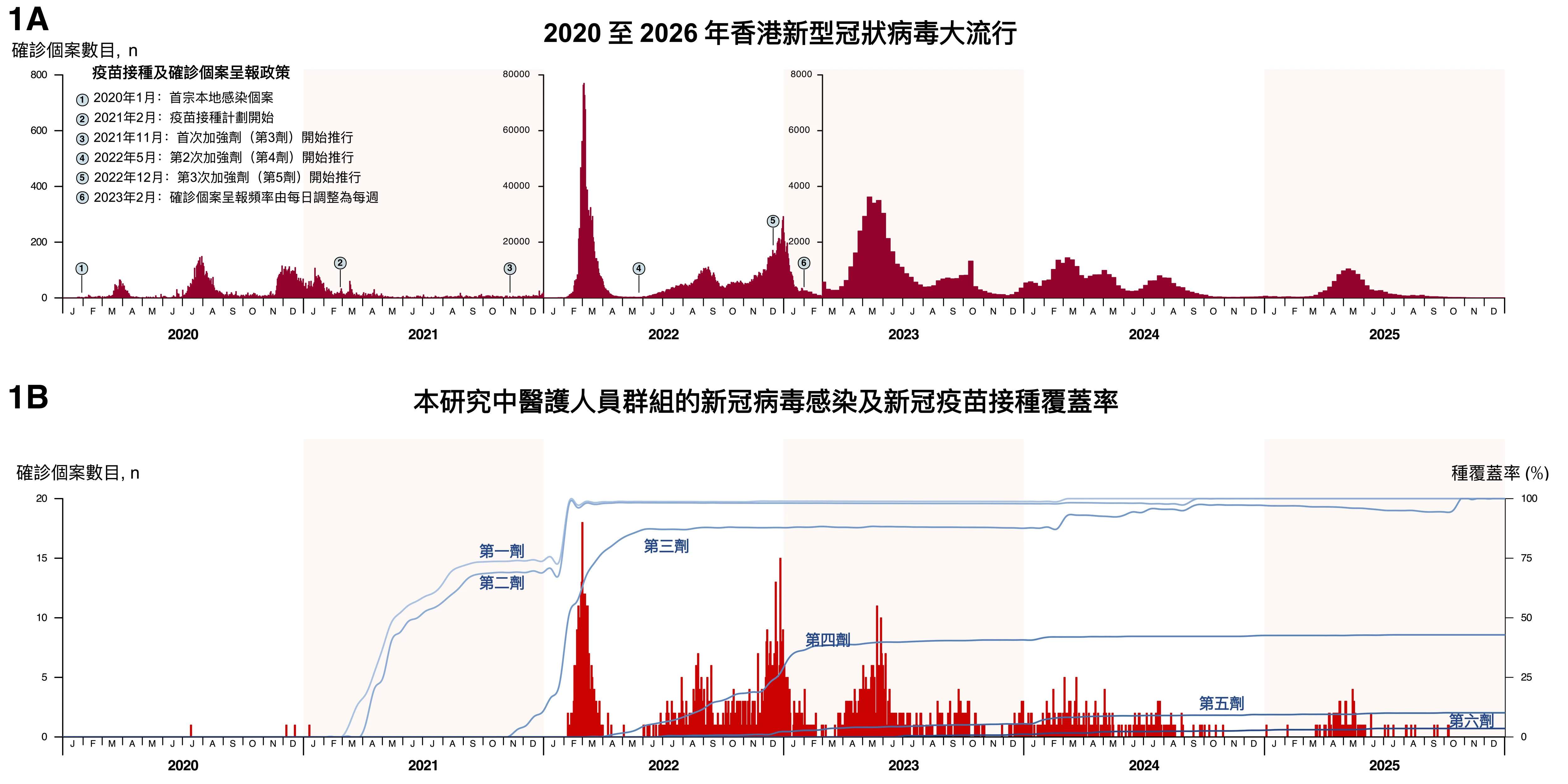
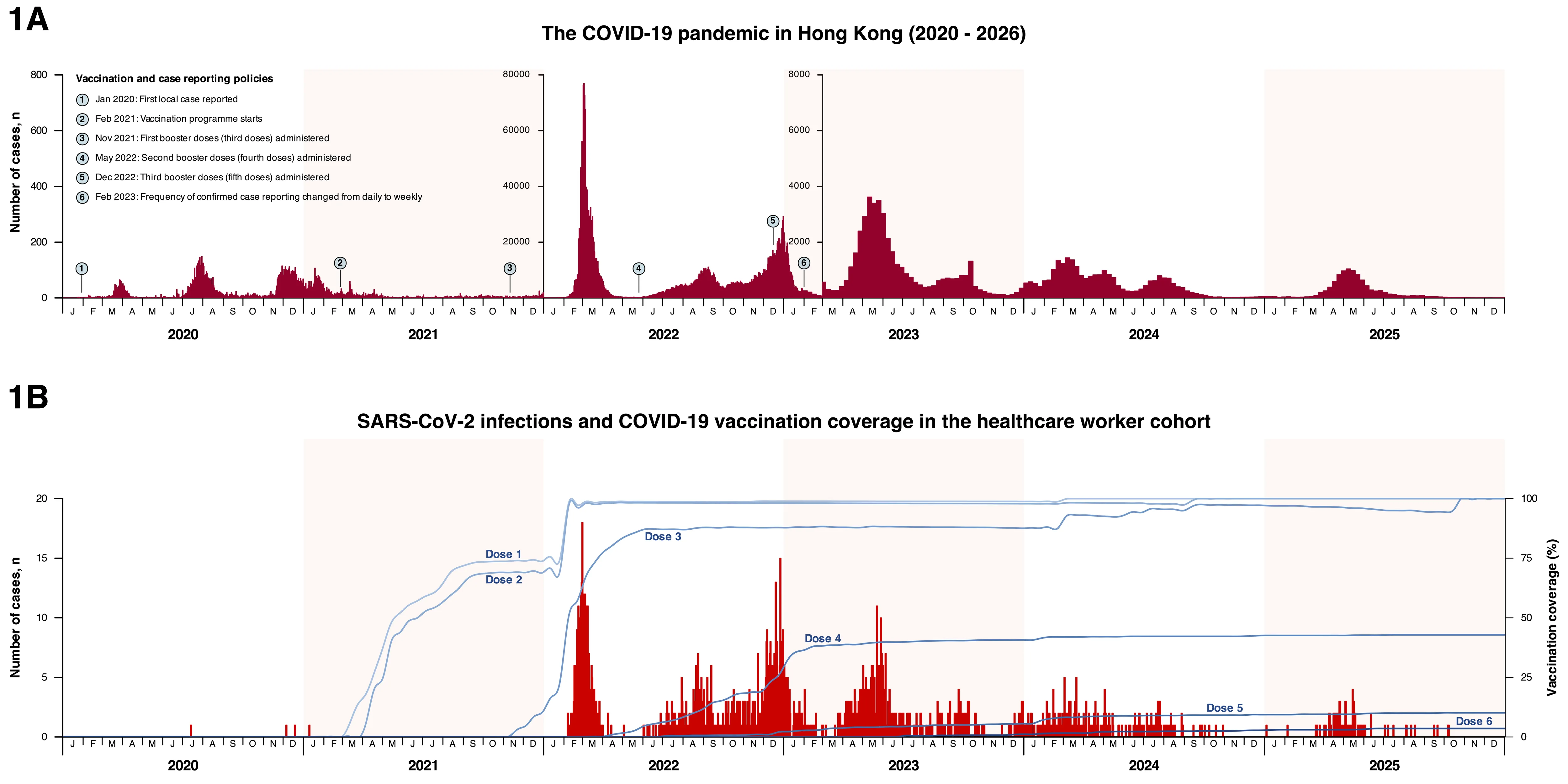
The Hong Kong healthcare worker cohort (2020 - 2026)
The HCW study was established in 2020 as a prospective cohort study among healthcare workers in Hong Kong to estimate the seroprevalence of SARS-CoV-2 antibodies, evaluate vaccine immunogenicity and effectiveness, and assess the durability of SARS-CoV-2 protection induced by vaccination and infection.1,2 Supported by two grants from the Health and Medical Research Fund of the Health Bureau, we enrolled 1,752 participants and collected 16,875 blood samples over the course of the study. With your support, we have been able to map SARS-CoV-2 epidemiology in healthcare workers, measure the performance of mRNA and inactivated COVID-19 vaccines, and understand the durability of immunity against infections and re-infections across distinct phases of the pandemic.
COVID-19 epidemiology in Hong Kong
In 2020 and 2021, Hong Kong experienced several waves of SARS-CoV-2 infections, which were effectively contained through stringent public health interventions.3 Our analyses showed that fewer than 1% of participating healthcare workers had been infected by December 2021.1 Vaccines were available since early 2021, and most participants had received two doses by August 2021 and a third dose by May 2022 (see Figure 1, panel B below).
Tracking immunity through successive boosters
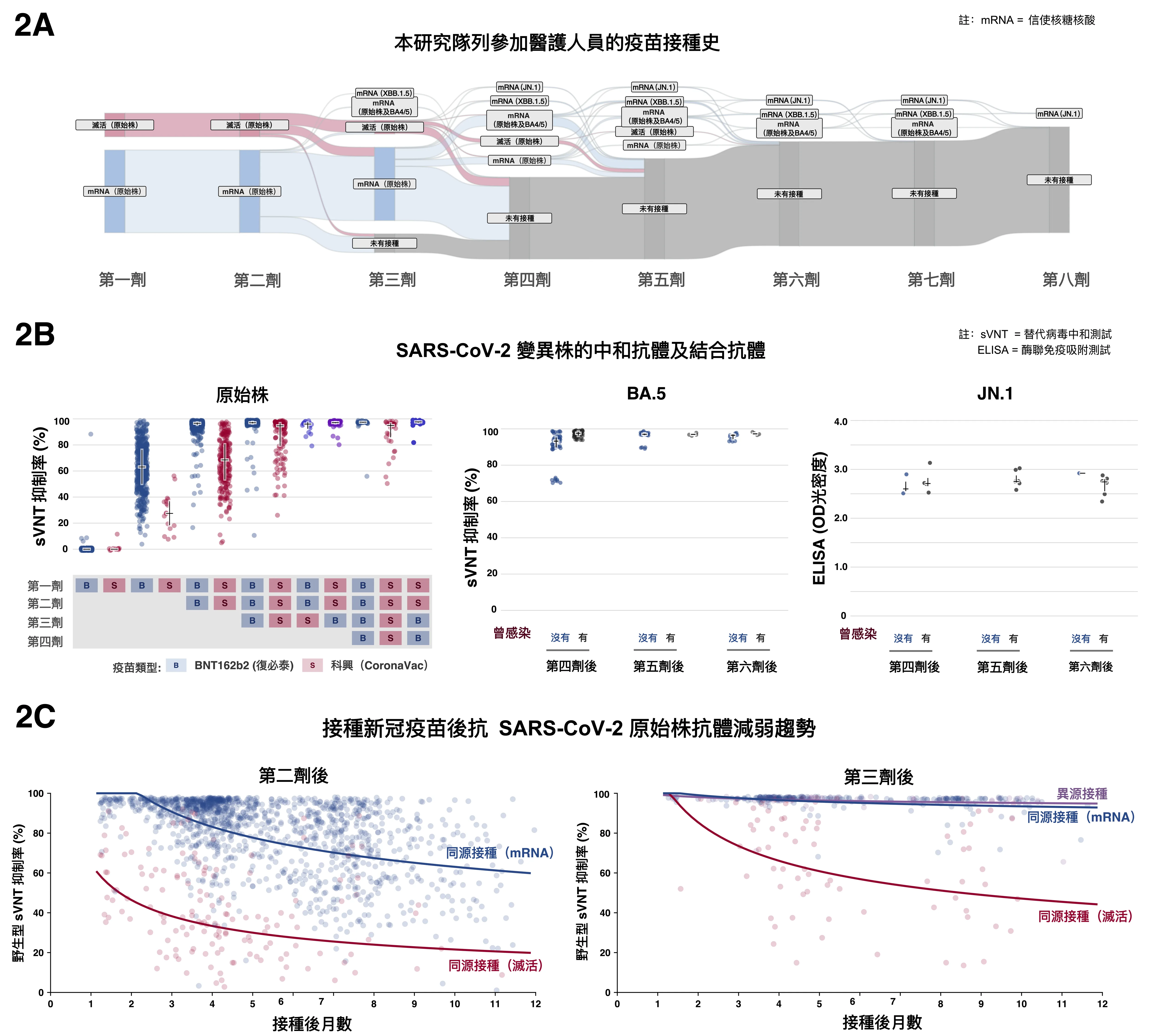
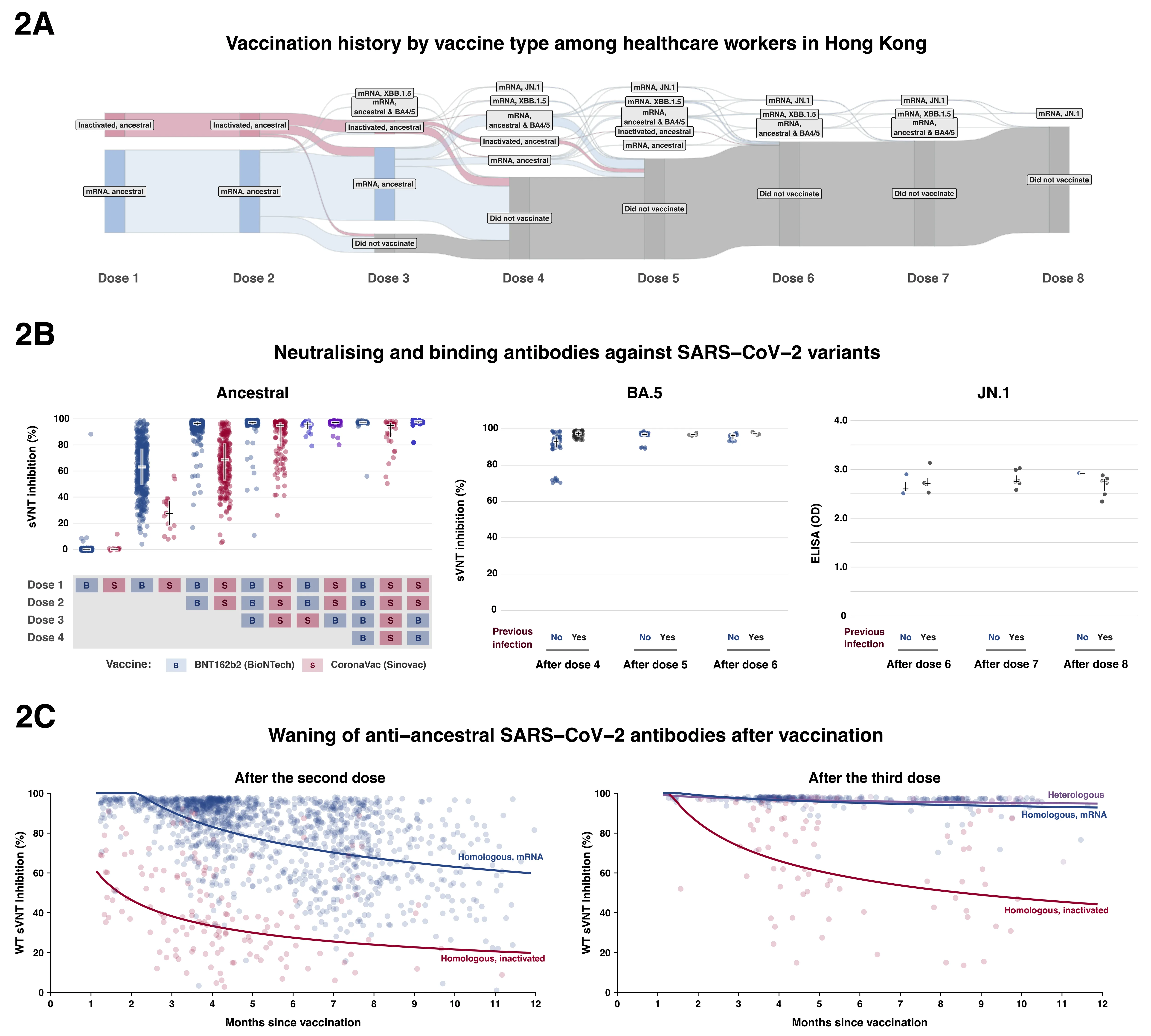
While our early work focused on the primary series,2 the multi-year timeline of this study allowed us to examine the antibody responses beyond the third dose. As visualized in Figure 2 panel A, participants in our cohort received up to 8 doses of COVID-19 vaccines over the six-year period to maintain protection. Our laboratory analysis of these samples, highlighted in Figure 2 panel B, provided insights into how immune systems responded to emerging variants:
- Broadening Protection: We tracked neutralizing and binding antibodies not only against the ancestral strain but against highly mutated variants like BA.5 and JN.1.
- The Booster Effect: Antibody levels reached very high peaks following the fourth, fifth, and sixth doses, indicating that the immune system remained highly responsive to repeated boosting.
- Vaccine Performance: While CoronaVac stimulated lower antibody levels than BNT162b2, separate studies have shown that it still provided robust effectiveness against severe disease.
Antibody waning and hybrid immunity
Figure 2C maps out a critical reality of COVID-19 immunity: anti-SARS-CoV-2 antibodies wane over time. This decline is noticeable within 3 to 6 months, particularly following CoronaVac vaccination. However, the data also revealed that natural breakthrough infections provided a generally stronger and longer-lasting antibody response. By sharing these insights with health authorities, this cohort directly accelerated the government's November 2021 recommendation for third doses of COVID-19 vaccines to be administered, directly protecting the wider Hong Kong community.
What we are working on next
The blood samples you provided will continue to be an invaluable scientific resource. We are continuing to analyze samples and data collected in this study, with publications in preparation on the vaccine effectiveness of successive booster doses, the impact of hybrid immunity, reinfection rates after different vaccination or infection histories, and patterns in antibody dynamics after infections and re-infections.
Thank you for your participation in this study over the past 6 years! We truly appreciate your support!
References
- Lim WW, Mak L, Ho F, et al. Seroprevalence of COVID-19 among healthcare workers in Hong Kong during the first 2 years of the COVID-19 pandemic (2020–2021): a longitudinal cohort study. BMJ Open 2026; 16: e110192. [link]
- Lim WW, Mak L, Leung GM, Cowling BJ, Peiris M. Comparative immunogenicity of mRNA and inactivated vaccines against COVID-19. Lancet Microbe 2021; 2: e423. [link]
- Yang B, Lin Y, Xiong W, et al. Comparison of control and transmission of COVID-19 across epidemic waves in Hong Kong: an observational study. Lancet Reg Health West Pac 2024; 43: 100969. [link]
- Leung NHL, Cheng SMS, Cohen CA, et al. Comparative antibody and cell-mediated immune responses, reactogenicity, and efficacy of homologous and heterologous boosting with CoronaVac and BNT162b2 (Cobovax): an open-label, randomised trial. Lancet Microbe 2023; 4: e670–82. [link]
- McMenamin ME, Nealon J, Lin Y, et al. Vaccine effectiveness of one, two, and three doses of BNT162b2 and CoronaVac against COVID-19 in Hong Kong: a population-based observational study. Lancet Infect Dis 2022; 22: 1435–43. [link]